

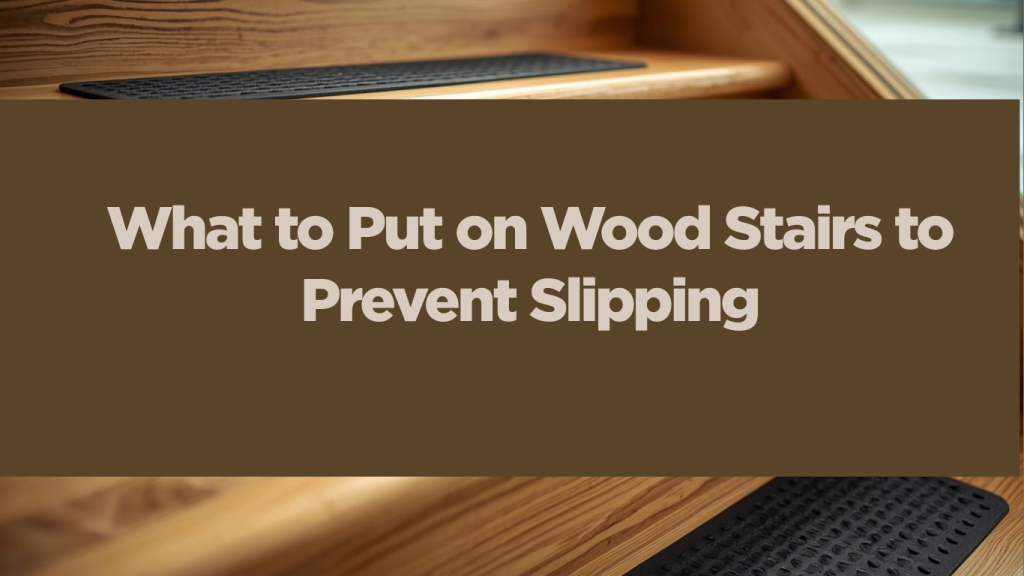
What to put on wood stairs to prevent slipping is a question most homeowners ask after the first close call. Stairs often feel safe until they don’t. Smooth finishes, worn treads, and winter moisture slowly change how wood behaves underfoot. You notice it when socks slide too easily or when outdoor steps feel risky after light rain.
If you’re here, you’re likely looking for a real fix, not guesswork. Some solutions improve grip at the surface level. Others address deeper issues tied to wear, edge shape, and material quality. Both matter, but they solve different problems.
In this guide, I’ll walk you through practical, proven ways to reduce slipping on wood stairs. You’ll learn why stairs become slick, which solutions work indoors and outdoors, and how to decide when a surface fix is enough, or when the stair itself needs attention.
What Makes Wood Stairs Slippery Over Time
Wood stairs rarely start out dangerous. The surface usually feels solid and predictable in the beginning. Problems develop slowly, often without notice.
Over time, finishes wear, edges soften, and everyday conditions change how the wood reacts underfoot. Slipperiness is usually the result of several small factors combining, not one obvious mistake.
Below are the most common reasons wood stairs lose traction as they age.
- Glossy or over-polished finishes: High-sheen polyurethane looks clean, but it reduces surface friction. Socks and bare feet slide more easily on smooth finishes.
- Compressed wood fibres from foot traffic: Repeated use compresses the grain, especially on stair treads. The surface becomes polished and slick over time. Homes with heavy traffic tend to notice this first.
- Worn stair nosings: The front edge of each step takes the most impact. Rounded or softened nosings reduce foot grip during descent. Many slips happen here because the edge stops “catching” the foot. A properly shaped stair nosing profile helps keep that edge definition longer.
- Dust, moisture, and fine debris: Even clean stairs collect grit. Combined with moisture, it creates a low-friction layer that feels unpredictable. Entry stairs and basement stairs often show this pattern.
- Outdoor exposure: Rain, condensation, algae, and seasonal temperature changes make outdoor wood stairs slippery year-round. The surface can feel fine in dry weather, then suddenly risky after a light drizzle.
Slippery stairs are usually a slow failure, not a sudden one.
By the time the problem feels obvious, surface wear and edge damage have often already set in. Understanding the cause matters before trying to fix the symptom.
Why Slip Prevention Matters for Long-Term Stair Safety
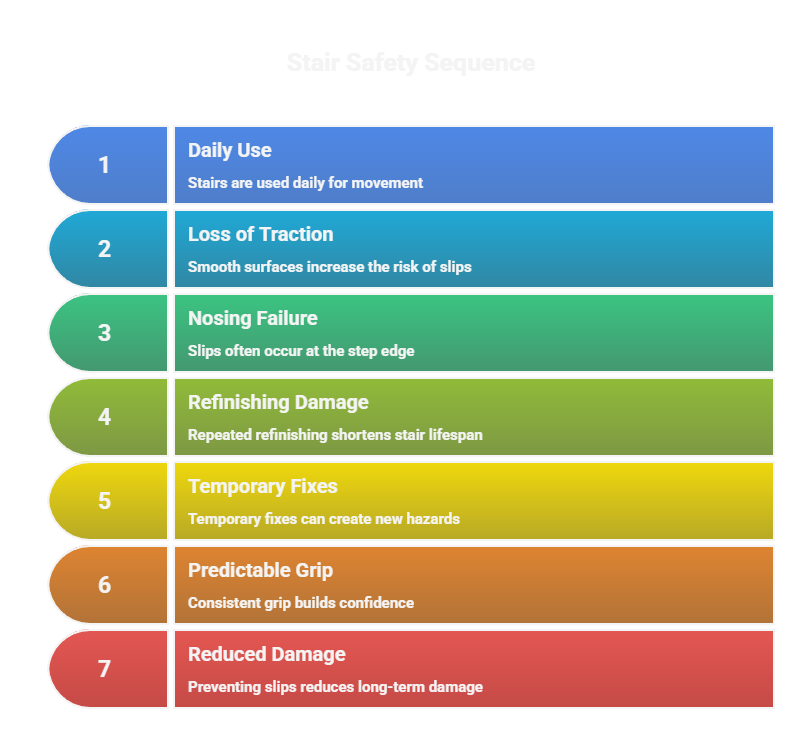
Stairs carry more risk than most homeowners realise. They are used daily, often without handrails, and usually while moving quickly.
A small loss of traction can have serious consequences. Slip prevention is not only about comfort. It affects safety, durability, and how often stairs need repair or refinishing.
Below are the key reasons slip prevention deserves early attention.
- Falls happen during normal use: Most stair accidents occur during everyday movement, not extreme conditions. Smooth surfaces increase that risk.
- The nosing is the most common failure point: Slips usually happen at the step edge, not the centre of the tread. Edge profile quality matters more than most people expect. Worn edges behave differently than well-formed edges.
- Repeated refinishing shortens stair lifespan: Each refinish removes material. Avoiding unnecessary rework protects the wood long term. Over time, heavy sanding can also soften edges further.
- Temporary fixes often create new hazards: Lifting tapes, uneven grit, or loose treads can cause trips instead of preventing them. A fix should never introduce a new problem.
- Safer stairs feel more predictable: Consistent grip builds confidence, especially for children, older adults, and guests. Predictable footing also changes how people use the stairs day to day.
Preventing slips early reduces long-term damage. It also avoids the cycle of quick fixes that fail and require replacement later. Well-maintained stair components age more gracefully and perform more reliably.
Practical Ways to Reduce Slipping on Wood Stairs
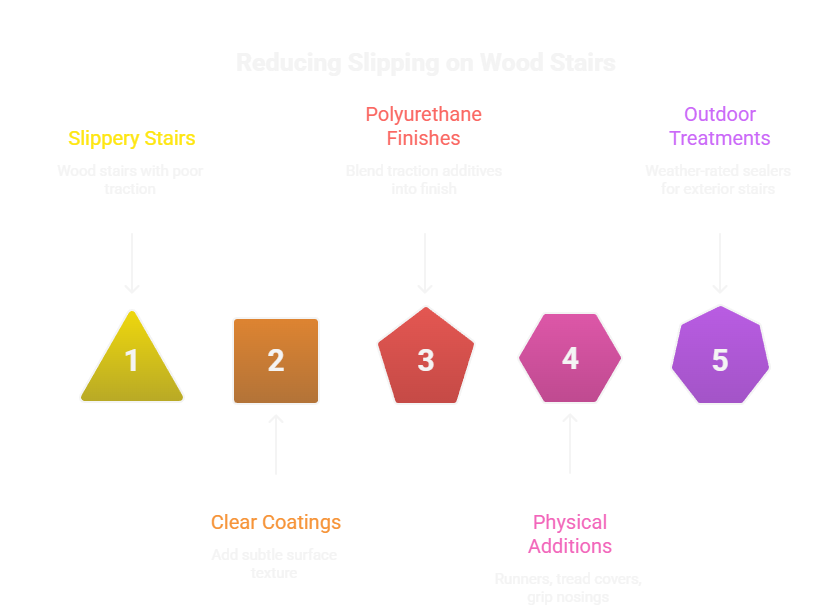
There is no single solution that works for every staircase. Indoor stairs, outdoor steps, and high-traffic areas all behave differently. The goal is to improve grip without compromising the wood or creating maintenance problems later.
Below are the most practical approaches used in real homes, each with a specific purpose.
Method No. 1: Clear anti-slip coatings
Clear coatings add subtle surface texture without covering the wood. They work well when the finish is intact but too smooth.
- Preserves natural wood appearance
- Works best on clean, properly prepared surfaces
- Requires careful application to avoid patchiness
Method No. 2: Non-slip polyurethane finishes
Non-slip polyurethane blends traction additives into the finish itself. This approach suits stair refinishing or new stair installations.
- Provides uniform grip across each tread
- Reduces slipperiness caused by gloss finishes
- Needs even mixing to avoid rough spots
A consistent finish performs best on properly milled hardwood stair treads, because the surface takes coating evenly and wears more predictably over time.
Method No. 3: Physical traction additions
Runners, tread covers, and grip nosings improve traction through surface contact.
- Immediate improvement in grip
- Helpful in homes with children or seniors
- Requires proper installation to avoid lifting edges
Method No. 4: Outdoor-specific treatments
Exterior stairs need weather-rated solutions. Indoor products fail quickly outside.
- Exterior anti-slip sealers resist moisture
- Drainage and surface slope affect performance
- Seasonal traction may still be needed in winter
Each method solves a specific problem. Choosing correctly avoids stacking solutions that conflict or wear unevenly over time.
But wait, you still have to learn some important things that matter in slipping prevention.
When Surface Fixes Aren’t Enough
Not every slippery stair problem comes from the finish. In many homes, coatings, tapes, or treads are applied repeatedly without lasting improvement. When traction issues keep returning, the cause is often deeper than the surface.
Stair design, material quality, and long-term wear play a larger role than most people realise.
Worn stair nosings lose their edge definition. That reduces grip exactly where the foot lands during descent. Poorly milled treads polish faster and hold finishes unevenly. Inconsistent tread depth affects balance, even when traction products are added.
Re-coating over damaged wood becomes a short-term solution.
When stairs continue to feel unsafe despite surface treatments, the problem is usually structural. Replacing worn components with properly milled stair parts often restores both grip and consistency. In those cases, addressing the staircase build itself becomes more effective than adding another layer on top.
How High-Quality Stair Parts Improve Grip and Safety
Slippery stairs often get treated like a “finish problem.” Many times, the finish does matter. Still, grip and safety start earlier than the final coat. The shape of the step, the accuracy of the milling, and the quality of the wood all influence traction.
When stair parts are made well, the surface stays more predictable underfoot. Wear happens more evenly.
Finishes bond better. Edges stay defined longer. Those details reduce slipping in a way that surface add-ons cannot.
- Precision-milled stair treads hold finishes more evenly
A flat, consistent tread surface helps coatings cure and wear uniformly. Uneven milling can create shiny patches and slick zones. A properly made set of hardwood stair treads tends to keep traction longer because the finish sits consistently across the grain.
- Well-shaped stair nosings reduce slips at the step edge
The step edge is where most slips begin. A rounded, worn edge stops “catching” the foot during descent. A clean, consistent stair nosing profile keeps the edge defined, which improves footing on the way down.
- Solid hardwood behaves more predictably than low-grade materials
Low-grade stair parts often wear unevenly. Some spots polish quickly. Others chip or dent. Solid hardwood tends to accept finishes more reliably, which helps maintain a steady grip over time.
- Custom sizing prevents uneven footing and an awkward step feel
Small inconsistencies change how people place their feet. Uneven tread depth or mismatched nosings can make the staircase feel unreliable. Custom stair components reduce those mismatches, which improves balance and confidence.
AV Hardwood fits naturally here as a local manufacturer supplying custom stair treads, nosings, and hardwood components designed to finish properly and perform safely over time.
Indoor vs Outdoor Stairs: Why the Right Materials Matter
Indoor and outdoor wood stairs fail in different ways. Indoor stairs usually become slippery because the finishes polish smoothly and the edges soften from traffic. Outdoor stairs fight moisture, algae, temperature swings, and seasonal movement.
Products that work well indoors often disappoint outside, even when applied carefully. Material choice, prep, and edge treatment matter more outdoors because conditions are less forgiving.
| Factor | Indoor wood stairs | Outdoor wood stairs |
| Main slip triggers | Polished finish, dust, socks | Rain, algae, frost, snow melt |
| Best traction approach | Finish choice + edge integrity | Weather-rated treatment + drainage control |
| Wear pattern | Traffic lanes polish smooth | Moisture cycles + surface breakdown |
| What fails fastest | Glossy topcoats in high traffic | Indoor coatings and tapes outdoors |
| What matters most | Consistent tread finish and nosing shape | Wood prep, sealing, and edge protection |
Outdoor stairs need wood that is prepped for moisture and movement. A coating cannot compensate for poor edge durability or water exposure. Indoor stairs benefit most from properly finished solid hardwood that wears evenly and keeps grip predictable.
Cheap fixes often fail outdoors first, since moisture and temperature shifts break down adhesives and finishes faster.
You can treat indoor stairs like a controlled environment. Outdoor stairs never behave that way. The more exposed the stair is, the more the material and construction quality decide the outcome. The next section helps you choose between quick traction fixes and lasting upgrades.
DIY Fixes vs Long-Term Stair Solutions
DIY solutions can help, but they don’t correct worn stair geometry or low-quality materials. Most DIY methods improve traction on the surface. Long-term solutions improve the stair itself, which changes how the staircase performs year after year.
The right choice depends on the condition of the treads, the edge shape, and how often the staircase is used.
| Area | DIY traction fixes | Long-term stair solutions |
| Purpose | Quick grip improvement | Structural, lasting safety |
| Best use case | Mild slipping on intact stairs | Worn treads, rounded nosings, recurring issues |
| Durability | Weeks to months | Years, with normal maintenance |
| Common issues | Peeling edges, uneven feel, residue | Higher upfront work, fewer repeat fixes |
| What it cannot fix | Worn edges, uneven treads, poor milling | Not needed if stairs are already in great shape |
DIY makes sense when stairs are in good condition and just feel a bit slick. Long-term solutions make sense when the staircase keeps becoming unsafe after every new coating, strip, or quick patch.
Replacing worn stair treads or restoring edge definition with proper nosings changes the baseline safety of the stair, not just the surface behaviour.
Choosing a Long-Term Solution That Actually Lasts
Lasting stair safety comes from diagnosing the real failure point before buying another product. Some stairs only need a better finish system. Others need worn parts replaced because the shape and wear pattern no longer support safe footing.
Use the checkpoints below to decide whether you’re dealing with a surface issue or a component issue.
Below are the key criteria:
- Are the treads worn or rounded in the traffic lane?
Look for shiny “paths” down the centre where the surface has been polished smooth. - Is the nosing damaged or softened at the edge?
A rounded edge reduces the foot’s stopping point during descent. - Does the finish fail repeatedly in the same spots?
If the same areas turn slick again, the issue may be wear and material, not product choice. - Is the staircase high-traffic every day?
Busy staircases need materials and edge profiles that hold up to constant use.
In many cases, upgrading stair components provides better results than repeatedly adding surface products. When the staircase is rebuilt on consistent treads and reliable nosing profiles, coatings and traction systems tend to work better too.
Final Verdict
Coatings and anti-slip products help, especially when the stairs are in good condition. Still, safe stairs are not built on finishes alone. Well-made stair parts form the foundation because they hold finishes evenly, wear predictably, and keep edges defined.
When traction problems keep returning, fixing the cause beats masking the symptom.
That’s the end of our guide on what to put on wood stairs to prevent slipping.
Frequently Asked Questions
Do stair treads and nosings affect how slippery stairs feel?
Yes. Stair components play a larger role than many people realise. Poor-quality or worn parts reduce traction regardless of finish.
Are slippery wood stairs always a finish problem?
Not always. Finishes can contribute, but recurring slipperiness often points to worn edges, uneven tread surfaces, or inconsistent stair geometry.
What works better for indoor stairs: coatings or physical traction?
Indoor stairs usually respond well to finish-based solutions when the wood is in good condition. Clear anti-slip coatings or non-slip polyurethane can improve grip without changing the look.
Why do outdoor wood stairs become slippery so quickly?
Before knowing what to put on wood stairs to prevent slipping, learn this first. Outdoor stairs face moisture, algae, temperature swings, and surface movement. Those conditions break down indoor products fast.
Are DIY anti-slip solutions safe long-term?
DIY solutions can help in the short term, especially on lightly used stairs. They rarely address worn tread surfaces or rounded nosings. When traction problems return quickly, long-term fixes usually involve repairing or upgrading the stair components themselves.
How do I know when it’s time to upgrade stair parts instead of refinishing again?
Repeated refinishing, soft edges, polished traffic paths, and uneven footing are common signals. When stairs keep feeling unsafe despite new finishes or tapes, improving the quality and consistency of the stair parts often delivers more reliable results than another surface treatment.
Start profiting from your network—sign up today!
Refer and earn up to 50% commission—join now!
Promote our brand and get paid—enroll in our affiliate program!
https://shorturl.fm/keAVc
https://shorturl.fm/qgDOI
https://shorturl.fm/WPaop
https://shorturl.fm/ts0Zl
https://shorturl.fm/gm8kR
https://shorturl.fm/3KIC8
https://shorturl.fm/ptXd7
https://shorturl.fm/y3qte
https://shorturl.fm/mFuk2
https://shorturl.fm/xUsCs