

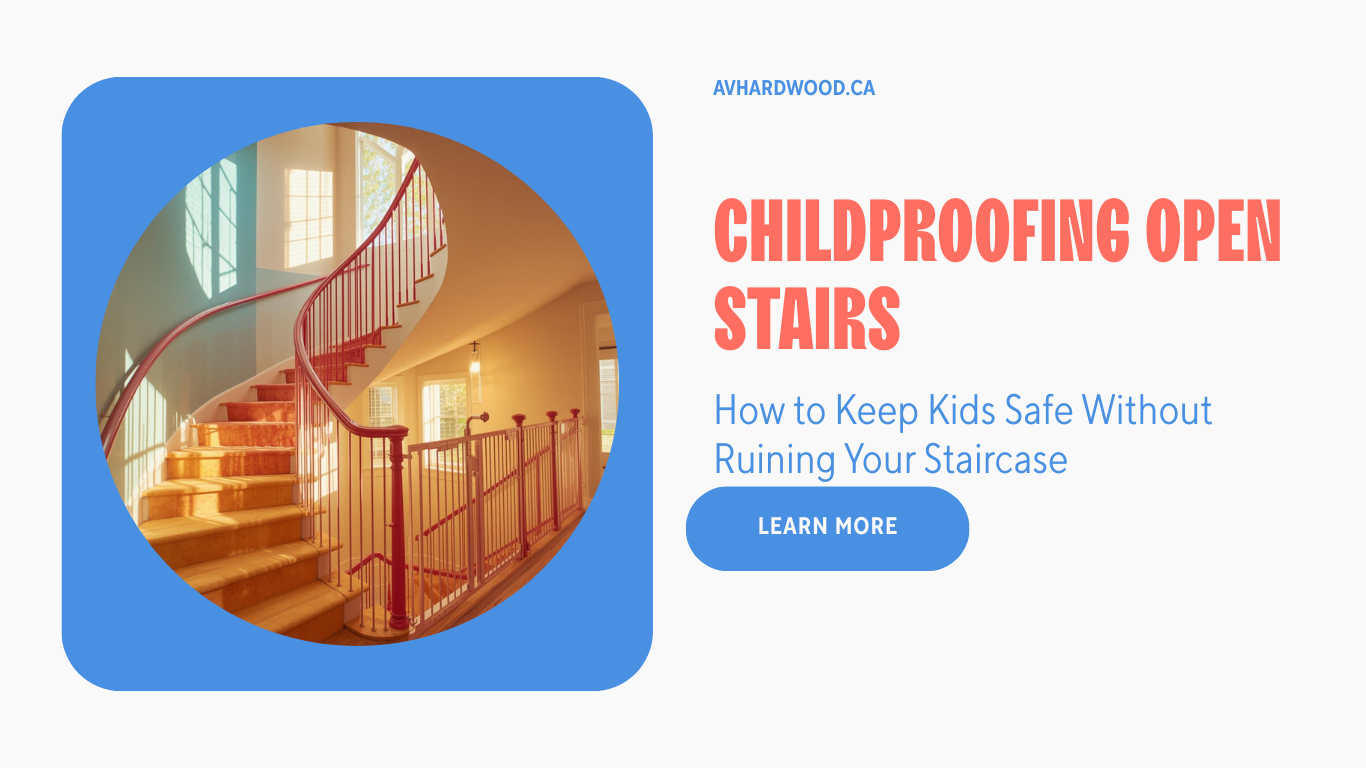
Childproofing open stairs becomes urgent the moment a baby starts crawling or pulling up. Open staircases look clean and modern, but they expose risks many parents don’t see at first. Open risers, wide railing gaps, and long stairwell drops create more than one hazard. A single gate rarely solves all of them.
Real safety comes from understanding how children move, climb, and lose balance during normal daily moments.
In GTA homes, especially townhomes and open-concept layouts, stairs sit right in living spaces, not behind doors. That makes quick fixes tempting, but also unreliable. This guide breaks childproofing down properly.
It explains where risks actually come from, which solutions work together, and when stair design itself matters more than add-ons.
What is Childproofing Open Stairs?
Childproofing open stairs means reducing fall, climb, and squeeze-through risks created by stair design. Open staircases expose more than one danger point.
Parents often focus on the steps, but hazards also exist at railings, landings, and vertical openings. Each area behaves differently under pressure and movement.
Open risers allow feet and heads to pass through gaps between steps. Railing gaps create squeeze-through risks along the sides. Stairwell openings increase fall height, especially in townhomes and open-concept GTA homes.
Effective childproofing treats the staircase as a system, not a single surface. That system includes stair geometry, rails, edges, and access control, not just gates added later.
Why is Childproofing Stairs Important?
Childproofing open stairs matters because stair injuries rarely come from one dramatic failure. Most accidents happen during routine movement, short distractions, or climbing attempts. Action taken early prevents layering unsafe fixes later. Below are just some of the reasons why childproofing stairs are must:
Fall height and injury risk
Open stairwells increase fall severity. A toddler falling through a railing gap can drop multiple levels instead of tumbling down steps.
Homes with open layouts and floating stair designs see higher fall potential. Staircases built with consistent stair systems reduce unpredictable drop zones when paired with proper barriers.
Climbing and squeeze-through hazards
Toddlers treat stair railings like ladders. Horizontal elements, wide baluster spacing, and open risers create footholds. Children pull upward before parents expect it. Rail systems with properly spaced handrails and solid posts reduce climbability at key leverage points.
Why “just watching them” fails
Supervision breaks down during daily routines. Cooking, carrying laundry, answering doors, or helping another child creates short gaps.
Stair accidents often happen during those moments. Relying on attention alone places pressure on parents instead of removing the hazard itself.
Seasonal traction and sock slips
Ontario winters make stairs riskier indoors. Dry air, smooth finishes, and socks reduce traction. Toddlers lose footing faster than adults.
Stair safety improves when tread surfaces provide consistent grip, especially on well-profiled wood stair treads designed for daily use.
Temporary fixes create long-term risk
Zip-tied gates, loose mesh, and pressure barriers shift over time. Children test boundaries constantly. Temporary fixes often loosen without notice. Stable mounting surfaces and proper edge control reduce the need for repeated adjustments.
Childproofing Open Stairs: The Real Risks Parents Overlook
We can’t overlook that many stair accidents happen even after parents install gates. That failure usually comes from misunderstanding where risk actually lives.
Open stairs create layered hazards, and solving one layer does not remove the others.
Open risers vs railing gaps
Open risers and railing gaps look similar but behave differently. Risers allow downward falls between steps. Railings allow sideways squeeze-through. Each requires a different solution. Blocking one without addressing the other leaves exposure.
Staircases built with consistent geometry and defined edges respond better to safety additions than irregular layouts.
Top of stairs vs bottom of stairs
Bottom gates stop climbing. Top gates prevent falls. The top of the stairs carries a higher injury risk because falls start from standing height. Hardware-mounted barriers anchored into a solid structure perform better at landings than pressure systems braced against trim or drywall.
Pressure force and gate failure
Toddlers push harder than most parents expect. Leaning, shaking, and bouncing apply force repeatedly. Pressure-mounted gates can shift or pop free when mounted on uneven surfaces. Stair edges and transitions matter here.
Clean interfaces, including proper floor transitions at landings, help mounting hardware stay secure.
Poor stair safety usually doesn’t come from ignoring risk. It comes from treating one problem while leaving others exposed. Let’s now learn what the steps are to take for safety.
How to Baby-Proof Open Stairs Safely
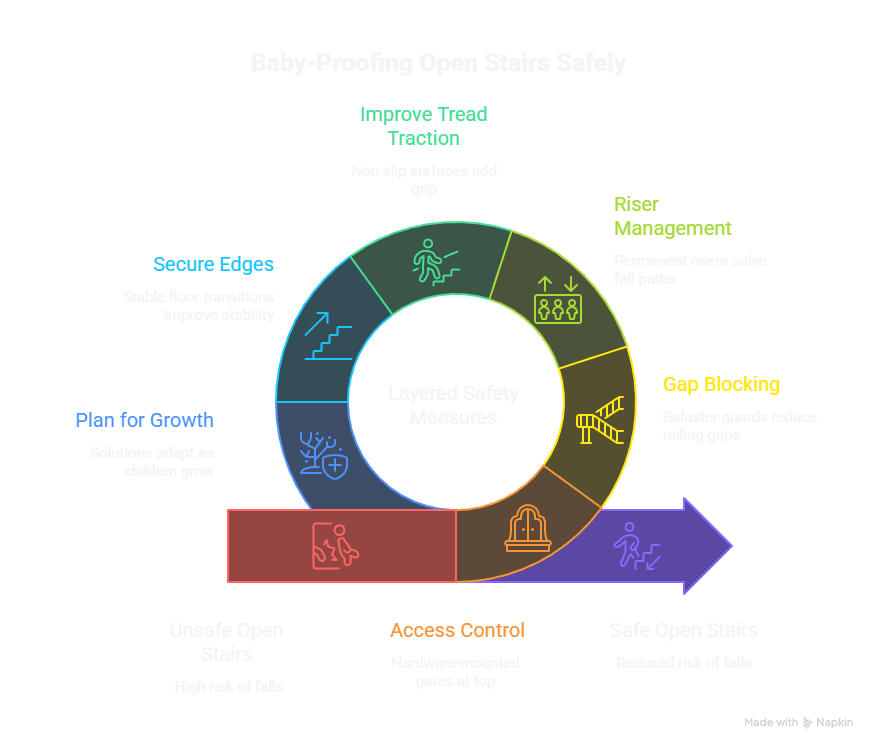
Childproofing open stairs works best when you think in stages, not products. Parents often rush to install a gate, then assume the job is done. Open staircases demand a wider approach. Access control, fall prevention, and surface safety must work together.
Each step supports the next. When one layer fails, another still protects the child. That redundancy is what keeps accidents from happening during normal, distracted moments.
Below are the most effective ways to baby-proof open stairs safely.
Controlling access to the stairs
Start by controlling movement, not modifying the stairs themselves. Hardware-mounted gates at the top of stairs matter most.
Bottom gates add a second layer. Landing barriers help in split-level layouts. Secure mounting points matter more than the gate brand. Solid stair framing and defined edges support safer installation than trim or drywall alone.
Blocking gaps in railings
Railing gaps allow sideways falls and squeeze-through accidents. Baluster guards, rigid panels, or spacing inserts reduce that risk.
Clear solutions work well in modern homes. Railing systems built with consistent handrails and anchored posts accept safety additions more securely than irregular rail layouts.
Managing open risers
Open risers create vertical fall paths between steps. Temporary infill panels work short term. Permanent risers solve the problem fully. Families planning to stay long term often choose structural solutions over removable ones.
Staircases built with properly sized wood stair treads align better with infill systems and reduce uneven gaps.
Improving tread traction
Slips cause many stair injuries, especially in socks. Smooth finishes increase risk. Non-slip surfaces or runners add grip without blocking movement. Traction matters more in winter, when dry indoor air reduces friction. Proper tread profiles also help feet land predictably.
Securing stair edges and transitions
Landings and edge transitions affect how gates and panels perform. Uneven flooring or soft trim causes mounts to loosen over time. Clean interfaces using stable floor transitions improve long-term stability and reduce adjustment failures.
Planning for growth and removal
Babies turn into climbers quickly. Solutions should adapt as children grow. Avoid fixes that damage rails or stairs permanently unless a long-term upgrade is planned. Thinking ahead prevents repeated rework.
Childproofing open stairs works best when these measures support each other. Parents who combine access control, gap blocking, riser management, traction, and stable mounting see far fewer failures. Shortcuts usually reappear later as new hazards.
Child-proof Stairs Ideas for Different Home Types
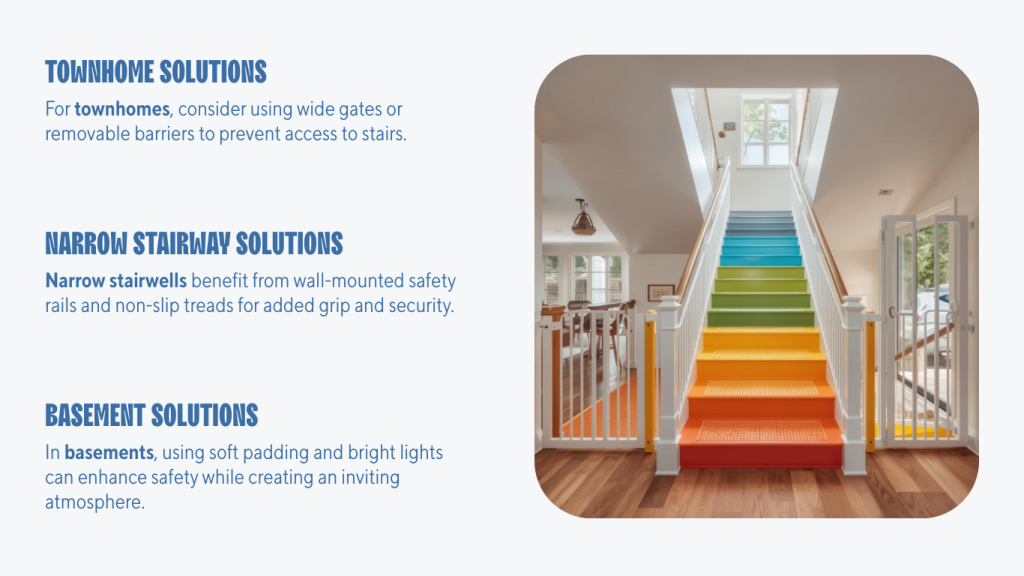
Homes across Toronto and the GTA vary widely. Townhomes, condos, and detached houses create different stair challenges. Effective child-proof stairs ideas respond to layout, not trends.
Townhomes and narrow stairwells
Townhomes often have tight stair widths and limited wall space. Gate placement becomes tricky. Narrow landings leave little margin for error. Slim-profile barriers and rail-mounted solutions work better here. Stair systems with consistent geometry allow safer mounting without blocking daily movement.
Modern open-concept homes
Open-concept homes prioritize sightlines. Parents worry about ruining the look. Clear panels, minimalist guards, and integrated barriers protect children without closing the space visually. Clean detailing matters. Well-finished stair components accept modern safety additions without looking temporary.
Basement stairs and secondary staircases
Basement stairs get ignored until accidents happen. Lower lighting, steeper angles, and concrete transitions increase risk. Secondary staircases benefit from the same safety planning as main stairs. Consistent materials and proper edge definition reduce surprises underfoot.
Different homes need different solutions. Safety improves whenthe design responds to the layout instead of forcing one fix everywhere.
Childproofing Stair Railings Without Creating New Hazards
Many well-meaning fixes introduce new problems. Childproofing should reduce risk, not add it. Understanding where DIY solutions fail prevents costly mistakes.
Netting and mesh solutions
Netting helps block squeeze-through gaps in the short term. Poor tension or weak anchors turn netting into a climbing aid. Sagging mesh also creates finger traps. Netting works best when tightly installed and regularly checked. It should never replace solid barriers at high fall points.
Clear panels and rigid guards
Rigid panels offer predictable performance. Acrylic or polycarbonate guards block gaps without flexing. Installation quality matters more than material choice. Panels mounted to stable rails and posts last longer and resist push-out force from toddlers.
Zip ties, tape, and temporary fixes
Zip ties, tape, and pressure-only attachments fail quietly. They loosen under repeated force. Sharp edges and dangling ends create new hazards. Temporary fixes feel convenient but often require constant monitoring. Stable, properly mounted solutions reduce daily stress for parents.
Steps of Child Proofing: Layering Safety, Not Relying on One Fix
Parents often look for a single product that will “solve” stair safety. That approach rarely holds up in real homes. The step of child proofing works when safety is layered, not stacked onto one weak point. Gates alone fail if gaps remain.
Panels help, but slipping still happens. Teaching boundaries matters, but toddlers test limits daily. Long-term safety comes from combining access control, physical fall prevention, and behavioural guidance.
When stair components are designed and built properly, every layer performs better. That is where professional stair systems quietly outperform improvised fixes and constant adjustments.
Access control layer
Access control limits when and how children reach the stairs. Hardware-mounted gates at the top of stairs matter most, supported by bottom gates where needed.
Landing barriers help in split-level layouts. Gates perform best when mounted into a solid stair structure rather than trim.
Staircases built with consistent framing and proper stair systems provide reliable mounting points that stay secure under repeated force.
Fall prevention layer
Fall prevention addresses what happens if a child reaches the stairs. Traction reduces slips. Riser infill blocks vertical drop paths. Defined tread edges improve footing.
These details depend on component quality. Properly milled wood stair treads hold finishes evenly and maintain grip longer. Well-shaped stair nosings preserve edge definition where most falls begin.
Stable floor transitions at landings prevent shifting mounts and uneven steps.
Behaviour and supervision layer
As children grow, physical barriers shift roles. Teaching boundaries becomes possible, but only when stairs feel predictable and safe.
Consistent rail height, secure handrails, and solid posts give children stable reference points while learning. Good stair design supports learning instead of working against it.
Layered safety lasts because each element carries part of the load. Families who invest in well-built stair components reduce reliance on temporary fixes and constant monitoring.
In many GTA homes, upgrading stair parts through a local manufacturer like AV Hardwood creates a safer foundation first, then allows childproofing solutions to work as intended.
Reviewing real installations in the project gallery or discussing options through an appointment helps parents move from short-term patches to long-term peace of mind.
Well, our guide is almost going to end, but before that, let’s learn another important thing about stair components.
When Should Stair Components Be Upgraded?
Temporary childproofing reaches its limit when stair parts themselves create risk. Open risers that allow falls, wide rail spacing, loose posts, or rounded tread edges all undermine the safety layers added later.
Replacing or upgrading components solves the problem at its source. Proper risers remove vertical fall paths. Secure handrails and anchored posts reduce climbability and gate failure. Correctly profiled stair treads and nosings improve footing and predictability.
In many GTA homes, addressing stair geometry once proves safer than repeatedly adjusting add-ons.
Final Verdict
Open stairs can be childproofed safely, but safety rarely comes from one product. Gates, panels, and guards help, yet each addresses only part of the risk. Layered solutions work best when access control, fall prevention, and behaviour support each other.
In some homes, safer stair design outperforms add-ons because it removes hazards instead of covering them.
Informed planning always beats panic fixes. Parents who step back, assess the staircase as a system, and choose durable solutions experience fewer failures and less stress.
Reviewing real examples in the AV Hardwood gallery or discussing options through a measured appointment often leads to calmer, longer-lasting decisions than rushing to buy the next temporary fix.
Frequently asked questions
How do you childproof open stairs safely?
Safe childproofing combines layers. Start with access control at the top of the stairs. Block railing gaps and open risers next. Improve traction on treads. Secure all mounts to a solid structure.
How to baby-proof open stairs without drilling?
No-drill options exist, but they come with limits. Pressure-mounted gates and rail adapters can help in the short term. Stability depends on stair geometry and rail strength.
Homes with well-built stair systems tolerate non-invasive solutions better than irregular or decorative railings.
Are pressure gates safe at the top of stairs?
Pressure gates are generally less reliable at the top of stairs. Repeated pushing can loosen them. Hardware-mounted gates anchored into solid framing perform better at landings.
Pressure systems work more safely at the bottom of stairs,s where fall risk is lower.
How to child-proof stair railings with wide gaps?
Wide gaps require physical blocking. Rigid panels, baluster guards, or infill systems prevent squeeze-through accidents. Solutions mounted to secure handrails and posts last longer than temporary mesh alone.
What is the safest solution for open riser stairs?
The safest option removes the opening entirely. Permanent riser infill eliminates vertical fall paths. Temporary panels help, but need inspection. Staircases designed with proper tread and riser proportions accept infill cleanly and reduce ongoing adjustment.
When should parents consider permanent stair upgrades?
Improving the stairs themselves often delivers better safety than stacking more products.
Local manufacturers like AV Hardwood supply stair components designed to integrate safety from the start, not as an afterthought.